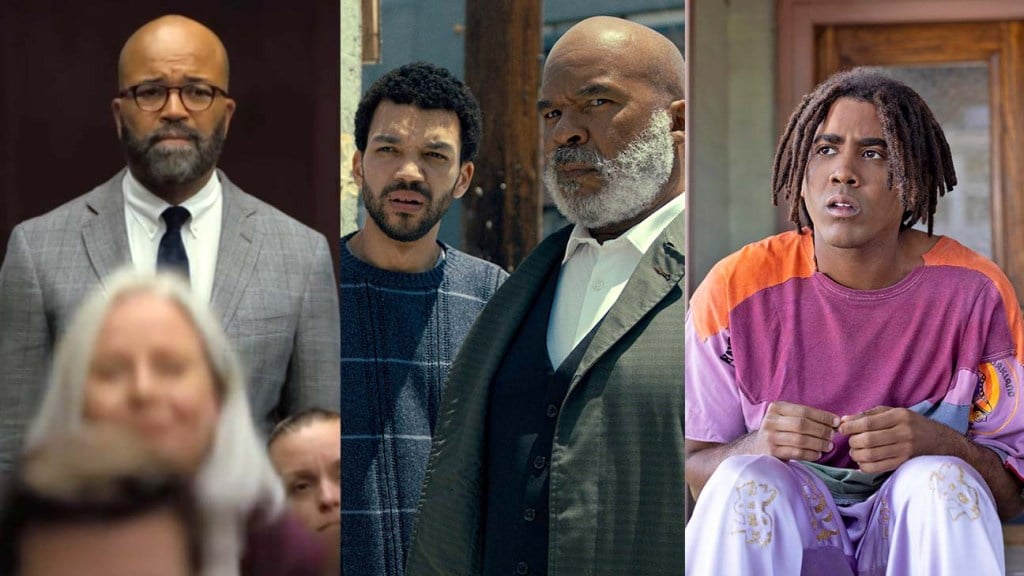
Kobi Libii's film "The American Society of Magical Negroes" falls short of delivering on its potential to skewer racial stereotypes and liberal sentimentalism, reflecting a trend of lukewarm Black satires stuck in responding to Obama-era post-racial delusions. In contrast, works like Boots Riley's "I'm a Virgo" and recent series like "Swarm" offer a more relevant and politically grounded approach to racial satire, tackling themes of racial capitalism and late-stage capitalism while embracing absurdity and humanity to deliver sharp social commentary.

"May December," directed by Todd Haynes, is a satirical exploration of true crime and a portrait of an actor at work. The film follows Natalie Portman's character, Elizabeth Berry, as she immerses herself in the life of a woman involved in a scandalous relationship with a 13-year-old boy. The movie delves into the nuances of acting and the superficiality of true crime entertainment, while also questioning the complexities of human behavior and the blurred lines between victim and perpetrator. Ultimately, "May December" serves as a critique of our obsession with virtuous heroes and mustache-twirling villains, offering a tragic reflection on aging and the loss of self.
The recent legal dispute between former NFL player Michael Oher and the Tuohy family, whose story inspired the film "The Blind Side," has reignited the debate around the white savior trope in Hollywood. The film, which earned over $250 million at the box office and won Sandra Bullock an Oscar, tells the story of a wealthy white woman who helps a homeless Black teen escape poverty. Critics argue that such films perpetuate racial stereotypes and undermine the agency of marginalized characters. While Hollywood has faced backlash for its use of the white savior trope, it continues to be a popular narrative choice, with recent examples including "Green Book" and "The Help." However, increased scrutiny and changing cultural mores may lead to more accountability in the industry.
The recent release of films like Barbie, Talk to Me, Red, White and Royal Blue, and Kokomo City showcases a significant increase in on-screen trans visibility, indicating that cinema may be at a tipping point for trans acting. These films offer diverse depictions of trans representation, from blockbusters to breakout hits, challenging societal norms and providing hope for public views on trans people. Despite facing bans in some countries, trans actors like Zoe Terakes, Hari Nef, and Aneesh Sheth are making strides in their respective roles, contributing to the normalizing of different gender identities and keeping the fight for LGBTQ+ rights alive.