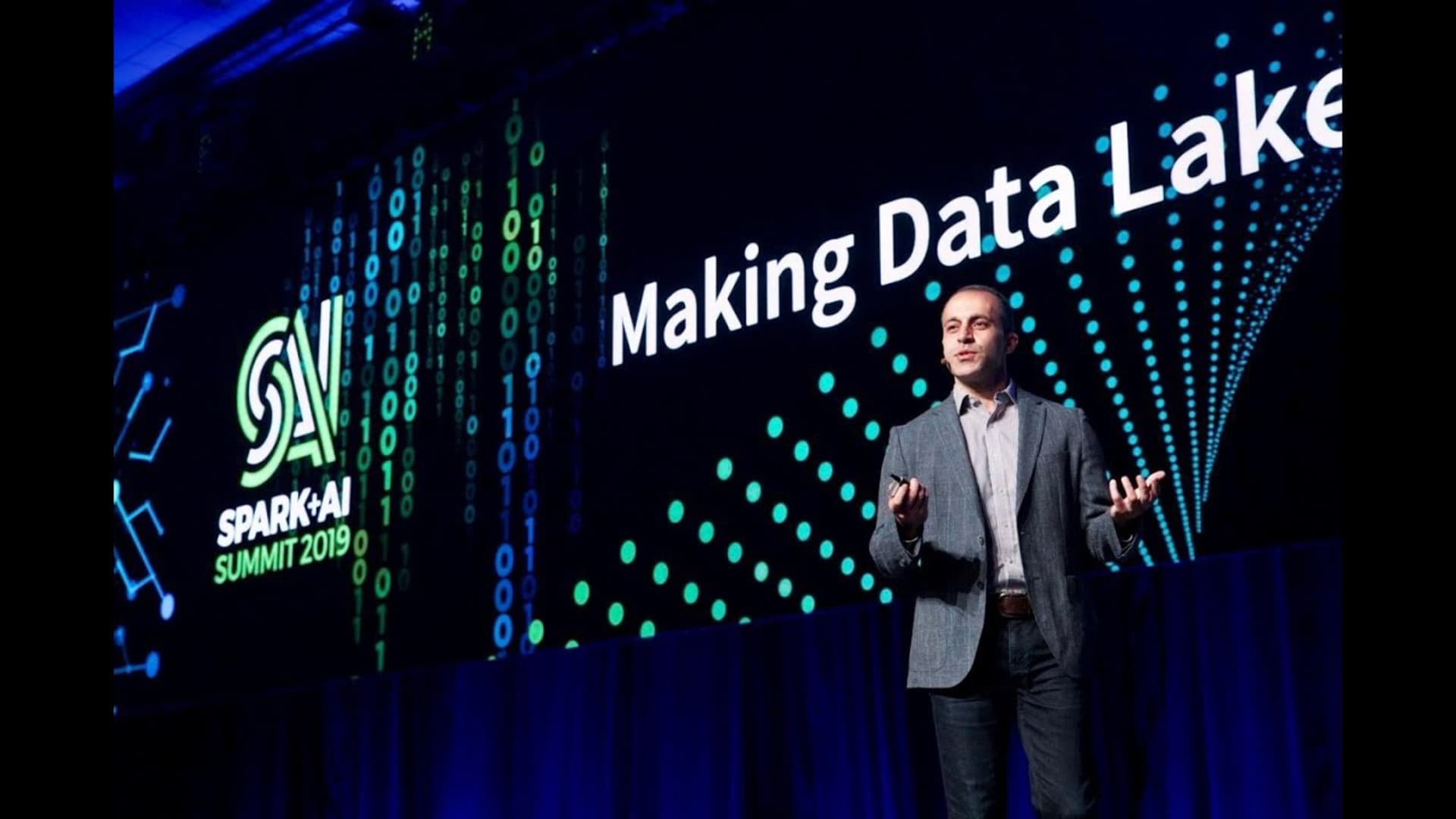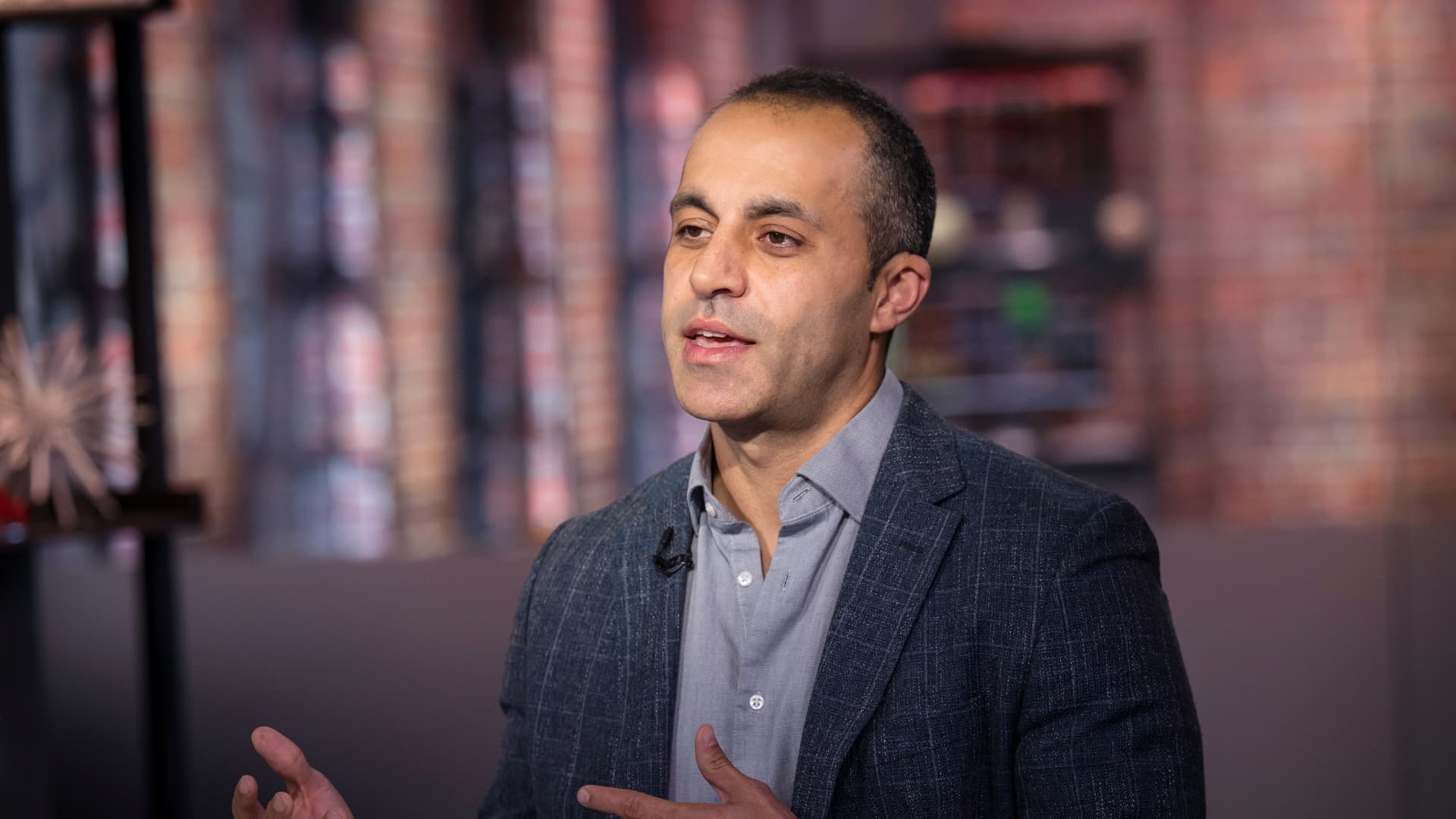
Databricks has raised $4 billion in a funding round valuing the company at $134 billion, marking a 34% increase from its previous valuation, with the funds aimed at supporting AI development and customer app building. The company reported a revenue run-rate of over $4.8 billion and a 55% year-over-year growth, continuing its trend of staying private longer to capitalize on private market funding opportunities.
Databricks raised over $4 billion in a funding round valuing the company at $134 billion, driven by investor confidence in AI's transformative potential, with the company experiencing rapid revenue growth and expanding its AI and data warehousing offerings.
Databricks is acquiring data optimization startup Tabular for over $1 billion, aiming to enhance its cloud data optimization capabilities and compete with Snowflake. The acquisition follows Databricks' recent funding and other strategic purchases, positioning it to grow market share despite economic challenges affecting other tech firms. Tabular, known for its work with Apache Iceberg, will help Databricks offer more cost-effective data query solutions.
Databricks spent $10 million and two months training its new generative AI model, DBRX, which is optimized for English but capable of translating into multiple languages. However, the model's hardware requirements make it difficult for non-Databricks customers to use, and it falls short of OpenAI's GPT-4 in most areas. DBRX also has limitations in accuracy and multimodal capabilities, and its training data sources and potential biases are not fully disclosed. Despite Databricks' promises to refine DBRX, it faces tough competition from other generative AI models and may be a tough sell to anyone but current or potential Databricks customers.
CNBC's Jim Cramer recommends buying AutoZone, citing the company's strong performance, the high average age of cars on the road, and its robust buyback program. However, Cramer expresses concerns about Snowflake's competition from Databricks and suggests considering Agilent over Aehr Test Systems. He also prefers Eli Lilly over Novo Nordisk. Cramer advises cashing out of Gogo, as it is no longer a favorable stock, and expresses optimism about Dream Finders Homes' continued success.
Databricks, the $43 billion analytics firm, has announced its acquisition of enterprise data company Arcion for approximately $100 million. The acquisition will enable Databricks to integrate Arcion's technology, making it easier for clients to add their data from software systems such as Salesforce, Workday, and Oracle. This is Databricks' first acquisition since acquiring MosaicML, an AI infrastructure startup, for $1.3 billion. The company plans to use Arcion's tech as the data source for MosaicML, further enhancing its AI capabilities. Databricks is considered a top contender for an IPO and aims to build a successful and sustainable business for the long term.
Data analytics software company Databricks has raised over $500 million in a funding round, valuing the company at $43 billion. The funding round saw participation from new investors Nvidia and Capital One, with Nvidia's involvement highlighting its focus on AI infrastructure startups. Databricks plans to use the funds to support its growth in the artificial intelligence sector. The company recently acquired MosaicML, a startup specializing in large language models. Databricks' ability to maintain its share price sets it apart from other software IPO candidates, such as Canva and Stripe. The company's CEO, Ali Ghodsi, stated that an IPO is still on the roadmap, but did not provide a timeline.
Microsoft is planning to sell a new version of Databricks' software through its Azure cloud-server unit, providing customers with an alternative to OpenAI's proprietary AI models. Databricks' software helps companies create AI applications from scratch or repurpose open-source models, potentially posing a threat to OpenAI's market share.
Databricks, a data-analytics company valued at $38 billion, acquired MosaicML, a startup disrupting the AI sector, in a $1.3 billion deal. The CEOs of both companies, Ali Ghodsi and Naveen Rao, met at a conference and discovered their shared goals of democratizing AI and prioritizing enterprise solutions. Despite initial reluctance, Ghodsi made an offer to Rao, who saw Databricks as the only suitable partner. Negotiations ensued, with Rao's persuasive arguments leading to a stock deal and strong alignment between the two companies. The acquisition closed in June, with MosaicML now operating as a self-contained group within Databricks.
Databricks is expanding its approach to data lakes by introducing Universal Format (UniForm), which allows data stored in Delta Lake to be read as if it were Apache Iceberg or Apache Hudi. This move aims to simplify the compatibility issues between Delta, Hudi, and Iceberg, and broaden Databricks' appeal in machine learning and data warehouse-type workloads. Meanwhile, Snowflake has announced updates to its Iceberg Tables, aiming to eliminate data silos and support unstructured data lake-style workloads. The battle between Databricks and Snowflake in the data lake world continues, with both companies striving to offer a unified platform for data management and analytics.
Databricks announces several updates to its data lakehouse platform, including LakehouseIQ, which offers natural language search and query capabilities powered by generative AI, and Lakehouse AI, which incorporates large language model (LLM) capabilities. The company also introduces Lakehouse Monitoring for performance analysis, Lakehouse Federation for querying external data sources, and Delta Universal Format (UniForm) to support interoperability with Apache Hudi and Apache Iceberg. Databricks Marketplace is now generally available, allowing users to discover and acquire datasets, data assets, and AI models. The company's acquisitions, including MosaicML and Okera, further strengthen its portfolio. The announcements coincide with Snowflake's own event, highlighting the intense competition between the two companies in the data and AI space.
Databricks has announced the launch of Delta Lake 3.0, reinforcing its commitment to open data lakehouses. The update includes automatic support for competing table formats Apache Iceberg and Hudi, allowing users to work with different file formats while still accessing Delta Lake's speed and scalability. Delta Lake 3.0 also introduces Delta Kernel for easier development and maintenance of Delta connectors, and Liquid Clustering for cost-effective data clustering. The release of Delta Lake 3.0 aims to provide greater interoperability and simplicity in the data ecosystem.
Databricks, a San Francisco-based data analytics company, has agreed to acquire AI startup MosaicML for $1.3 billion, valuing each of its 62 employees at $21 million. The deal includes retention packages for employees and marks a significant investment in generative AI for Databricks. The acquisition will allow Databricks' customers to build their own generative AI models. Databricks CEO Ali Ghodsi said the company has a high bar for hiring but was impressed by MosaicML's workers and culture. The deal is a sign of San Francisco's booming AI scene.
Databricks has acquired MosaicML, an AI startup focused on taking AI beyond the lab, for $1.3 billion. MosaicML's Composer program makes it easy and affordable to speed up the development of AI programs such as OpenAI's GPT. MosaicML's approach implies that whole areas of working with data, such as the traditional relational database, could be completely reinvented. The acquisition brings MosaicML into a vibrant non-relational database market that has been shifting the paradigm of a data store beyond row and column.
Databricks has acquired MosaicML, an open-source startup with neural networks expertise, for $1.3 billion. MosaicML has built a platform for organizations to train large language models and deploy generative AI tools based on them. The deal will see MosaicML become a part of the Databricks Lakehouse Platform, providing generative AI tooling alongside the Databricks’ existing multi-cloud offerings. The acquisition highlights the demand for talent and tech in the AI space, and there is likely to be more M&A coming in this space.