
Supreme Court's Perspective on Article 370: Intent, Consultation, and Self-Limitation
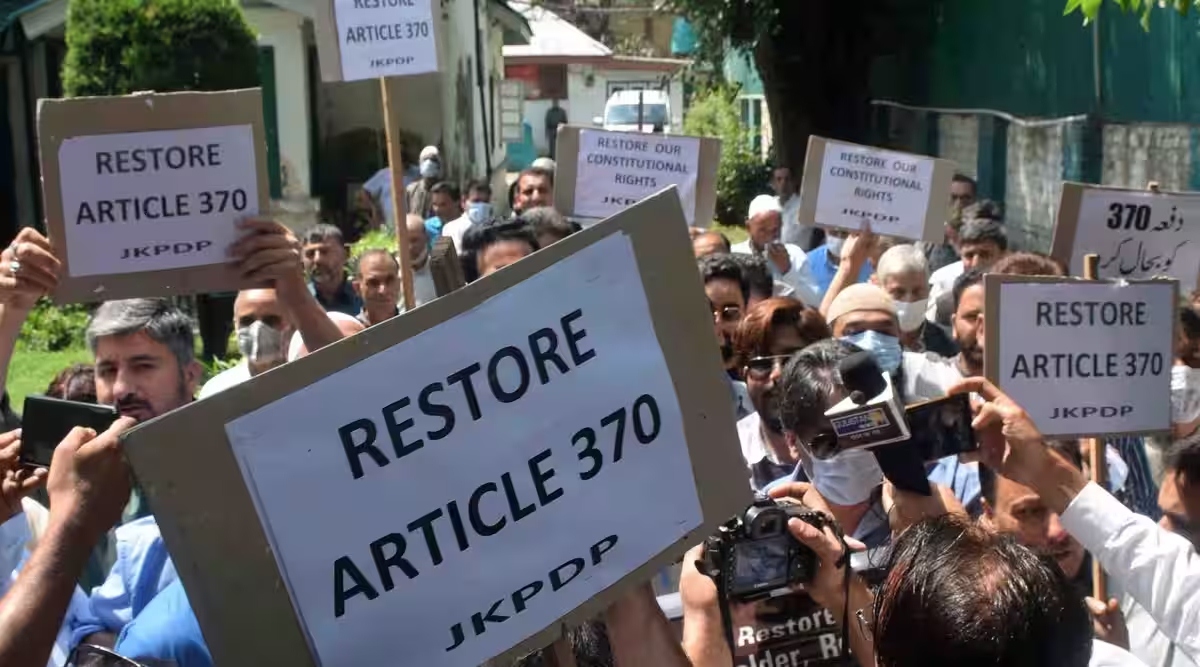
TL;DR Summary
The Supreme Court of India stated that Article 370, which granted special status to Jammu and Kashmir, was never intended to be permanent. The reference to Article 1 in Article 370, a permanent feature of the Constitution, indicates that Article 370 was not meant to be permanent. The inclusion of Article 1 in Article 370 during the interim period was to emphasize that Article 1 is a permanent part of the Constitution. The court also questioned whether the Constitution of India can be altered in ways contrary to the founders' intentions. The arguments on the case concluded, and the Centre will present its arguments on Thursday.
Topics:world#article-370#constitution-of-india#jammu-and-kashmir#law-and-politics#supreme-court#union-territories
- Article 370 was never intended to be permanent: SC The Indian Express
- Article 370: J&K governor was not consulted, top court says statements are post facto India Today
- Article 370 Hearing: SC Told Extreme Examples Are Necessary To Solve Extreme Cases The Wire
- Article 370: Can federating unit’s constitution be superior to that of the Union, asks SC Hindustan Times
- Article 370 Has "Self-Limiting Character": Supreme Court NDTV
- View Full Coverage on Google News
Reading Insights
Total Reads
0
Unique Readers
1
Time Saved
2 min
vs 3 min read
Condensed
82%
577 → 106 words
Want the full story? Read the original article
Read on The Indian Express