
"UAW Strike's Ripple Effect: Historic Gains and Budget Boosts"
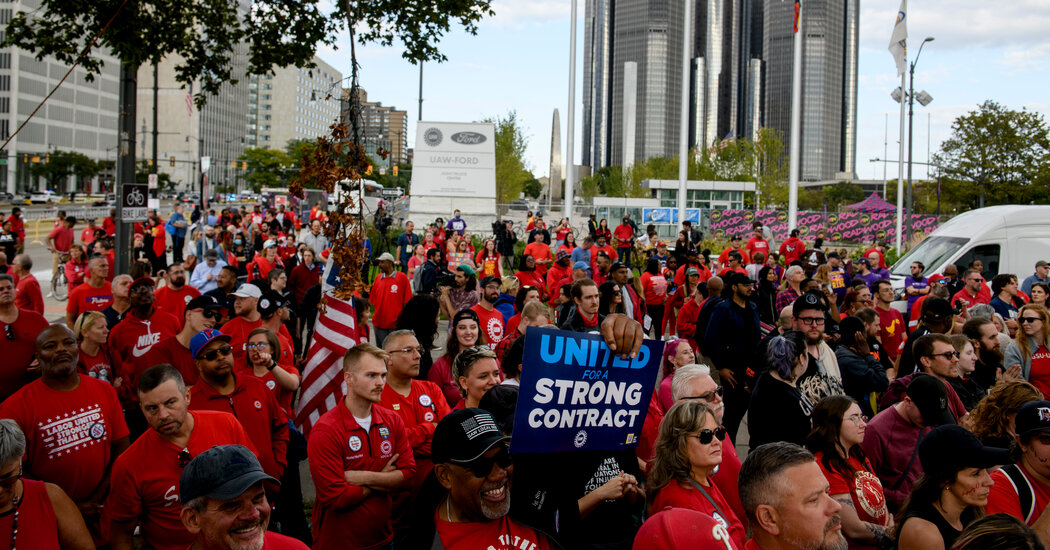
The United Automobile Workers (U.A.W.) strike and subsequent contract agreements with major U.S. automakers could have far-reaching implications for other workers and unions. The U.A.W.'s strategy of securing substantial gains through a strike in a critical industry has demonstrated the effectiveness of work stoppages and solidarity. Other unions have already shown interest in aligning their contract expirations with the U.A.W.'s, and the strike's success may embolden labor movements in other sectors. The U.A.W.'s approach of starting small and expanding strategically could be applicable to other industries, and the contracts also grant the union more influence over decision-making and the ability to extract concessions at non-unionized plants. The U.A.W. sees the contracts as a boost to their organizing efforts, particularly in the electric vehicle sector, and experts believe the momentum could extend to organizing campaigns in related industries.
- U.A.W. Strike Gains Could Reverberate Far Beyond Autos The New York Times
- GM strikes tentative deal with UAW to end six-week labor stoppage CNBC Television
- What the U.A.W. Won The New Yorker
- Big gains for UAW will boost budgets but what's the domino effect? Detroit Free Press
- UAW strike: Can historic gains satisfy workers' sky-high expectations? Automotive News
Reading Insights
0
12
6 min
vs 7 min read
90%
1,398 → 137 words
Want the full story? Read the original article
Read on The New York Times