
The Humanitarian Crisis in Nagorno-Karabakh: Understanding the Conflict and its Consequences
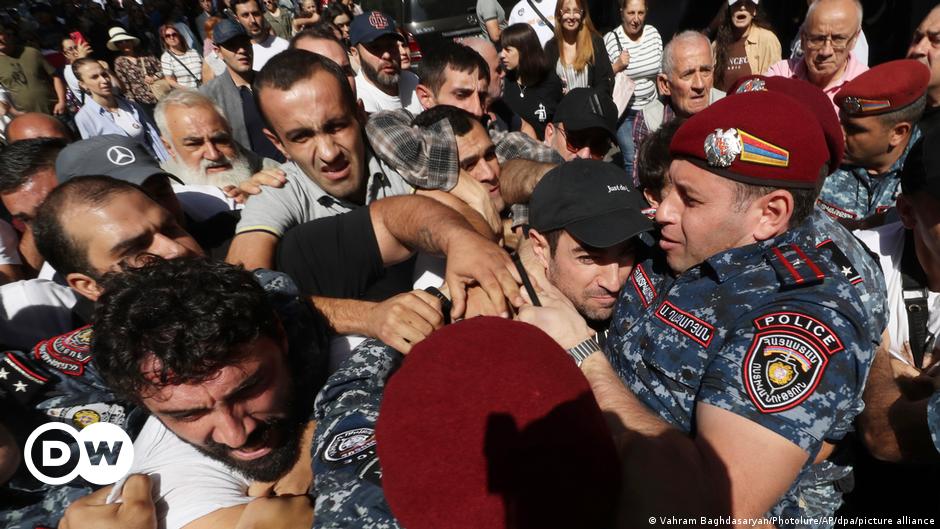
The conflict over Nagorno-Karabakh revolves around the disputed region's independence. Azerbaijan, supported by Turkey, has taken military control of the predominantly Armenian region, leading to the flight of many Armenians. The conflict has geopolitical consequences due to the presence of major oil and gas pipelines in the region. The roots of the conflict date back centuries, with tensions between Christian Armenians and Muslim Azerbaijanis. The collapse of the Soviet Union in 1991 led to the declaration of independence by Armenia, Azerbaijan, and Nagorno-Karabakh, resulting in a violent conflict that claimed thousands of lives. A cease-fire agreement was reached in 1994, but a second war broke out in 2020, resulting in territorial losses for Nagorno-Karabakh. The region's future remains uncertain, with Azerbaijan not guaranteeing autonomy and Armenia not recognizing the breakaway republic.
- What's behind the conflict over Nagorno-Karabakh? DW (English)
- Ethnic Armenians flee breakaway region of Nagorno-Karabakh | WION WION
- Azerbaijan says it lost 192 military personnel during operation to take control of Nagorno-Karabakh Al Jazeera English
- A humanitarian disaster is under way in Nagorno-Karabakh The Economist
- The Guardian view on Nagorno-Karabakh’s exodus: many have fled, but protection is still needed The Guardian
Reading Insights
0
1
3 min
vs 4 min read
80%
655 → 131 words
Want the full story? Read the original article
Read on DW (English)